

There comes a moment in every prophet's journey when God interrupts ordinary life.
For Moses it was a burning bush.
For Samuel it was a voice in the night.
For Isaiah it was a vision of the throne.
For Jeremiah it was a word before birth.
For Elisha it was a mantle.
For Paul it was a light on the Damascus road.
Different encounters.
Different assignments.
One common reality: God called.

Everyone wants to hear God…
But few understand what it means to represent Him.”
“A prophet is not someone who speaks occasionally…”
“A prophet is someone who carries God’s voice… consistently.”
“In this session, we correct identity.”

The Weight of the Calling
“The prophetic is not light…”
“It is a burden.”
“And once God speaks to you…”
“You are no longer free to ignore it.”
“In this session, you will feel the weight of the calling.”
Moses Syndrome: The Fear of Inadequacy
“God calls…”
“But insecurity answers.”
“Many are chosen…”
“But they disqualify themselves.”
“In this session, we confront the voice that says ‘I can’t.’”

Elijah Syndrome: Isolation & Burnout
“Power does not protect you from collapse.”
“Even prophets get tired…”
“Even prophets feel alone…”
“In this session, we expose burnout… and restore strength.”

The Eye of the Prophet
“Seeing is not the same as understanding.”
“Many see… but misinterpret.”
“Many feel… but assume.”
“In this session, we train your perception.”

Oil & Maintenance
“You don’t lose the gift…”
“You lose the sensitivity.”
“And when sensitivity is gone…”
“Clarity disappears.”
“In this session, we restore your oil.”

Yielding to God
“Control blocks clarity.”
“The more you hold on…”
“The less you hear.”
“In this session, we deal with surrender.”

"Anointing may attract people, but roots sustain destiny. Many seek fresh oil while neglecting the root system that produces it. Lasting prophets are not merely gifted—they are deeply rooted."

LESSON EXCERPT
One of the greatest questions every prophetic person asks is:
"How do I know it's really God?"
Was that God's voice?
Was it my thoughts?
Was it my emotions?
One of the least understood functions of prophetic ministry is the ministry of the watchman.
Most people think prophets exist primarily to encourage, predict, or reveal hidden things.
While prophets often do those things, Scripture reveals another important assignment:

One of the most common mistakes among developing prophetic people is confusing discernment with prophecy.
Not every impression is a prophecy.
Not every burden is a prophetic word.
Not every observation is revelation.

Many people think prophets exist to predict the future… But that’s only a small part of their function. So what is the true role of a prophet in the church? In this episode of School of the Prophets, we break down the biblical assignment of the prophet—what they are called to do, how they function in the body, and why misunderstanding this role creates confusion, division, and error.

Not everything supernatural is from God. Some voices are prophetic… And some are counterfeit. In this powerful episode of School of the Prophets, we expose the dangerous difference between true prophetic flow and divination. Many people assume that because something is accurate… it must be God. But accuracy alone does not prove divine origin. The enemy can imitate revelation. He can mimic spiritual manifestation. And if believers lack discernment, deception enters the Church.

Many prophetic people are gifted… but deeply wounded. Rejected. Misunderstood. Isolated. Emotionally bruised. And when rejection goes unhealed… it begins to affect the prophetic flow itself. In this powerful episode of School of the Prophets, we uncover the trap of rejection and wounded prophets—how pain distorts perception, damages identity, and opens doors to unhealthy ministry patterns. Not every prophetic reaction is spiritual warfare. Sometimes… it is unresolved pain.

The prophetic was never meant to glorify man. But in today’s culture, many ministers are drifting from servanthood to self-promotion.
Platforms. Followers. Recognition. Image. Influence. And slowly… ministry becomes more about visibility than purity.

“If your prophecy makes people impressed with you… instead of falling in love with Jesus… then something is wrong. Because the true spirit of prophecy has always been… the testimony of Jesus Christ.” What is the true purpose of prophecy? Is it prediction? Revelation? Mysteries? Spiritual power? According to scripture, the ultimate purpose of prophecy is this: To reveal Jesus.

Many believers can prophesy, receive dreams, or hear the voice of God, but does that make them a prophet? In this advanced lesson, we move beyond the gift of prophecy and explore the deeper identity, purpose, and responsibility of the prophetic office. What is a prophet really?

Many prophetic people understand prophecy but do not fully understand where the prophet fits within God's governmental structure for the Church.
In this advanced lesson from School of the Prophets Level 2, we examine the Fivefold Ministry and the unique role prophets play in equipping the saints and building the Body of Christ.

Did God establish schools for prophetic training? Many believers are surprised to discover that the Bible records organized communities of prophetic development known as the "School of the Prophets." In this powerful lesson, we examine the biblical origins of prophetic training and explore how God used Samuel, Elijah, and Elisha to raise future prophetic leaders.

Before God releases greater authority, He develops Christlike character.
Many believers desire prophetic gifting, but few understand that God's primary goal is not merely to use us—it is to transform us.
In this powerful lesson from School of the Prophets Level 2, we explore the relationship between image formation and sanctification.
God is not simply creating prophets; He is conforming sons and daughters into the image of Christ.

How does God call a prophet?
Can someone choose to become a prophet, or is prophetic calling initiated by God?
In this powerful lesson from School of the Prophets Level 2, we explore the divine calling of prophets throughout Scripture and uncover the patterns God uses to identify, prepare, and commission His prophetic vessels.

One of the greatest areas of confusion in the modern Church is the difference between a prophet and prophecy.
Can a believer prophesy without being a prophet?
Does receiving dreams, visions, or prophetic impressions automatically make someone a prophet?
In this important lesson from School of the Prophets Level 2, we explore the biblical distinction between the prophetic gift and the prophetic office.

Why do prophetic people sometimes get it wrong?
Can a genuine prophet make mistakes?
How do we distinguish between prophetic immaturity, prophetic error, and false prophecy?
In this important lesson from School of the Prophets Level 2, we examine the most common prophetic errors that hinder accuracy, damage credibility, and create confusion within the Body of Christ.

Are New Testament prophets the same as Old Testament prophets?
Many believers assume that prophetic ministry functions exactly the same today as it did under Moses, Samuel, Elijah, and Jeremiah.
However, the coming of Christ, the Cross, and the outpouring of the Holy Spirit brought significant changes to prophetic ministry.

Not all prophets function the same way. Throughout Scripture, God raised up different prophetic voices for different assignments. Some prophets were watchmen. Some were seers. Some were reformers. Some were governmental advisors to kings. Others carried deep burdens of intercession or worship.
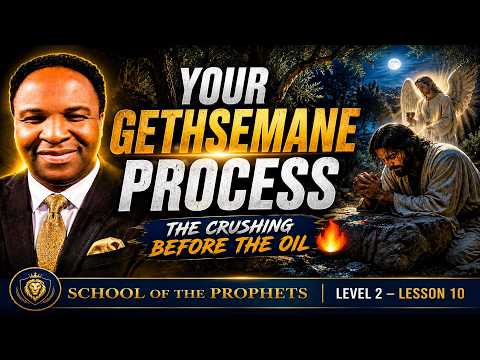
Many desire Pentecost.
Few desire Gethsemane.
Everyone wants resurrection power.
Few want the cross.
Everyone wants the mantle.
Few want the crushing.
Gethsemane means "oil press."
Olives are crushed before oil flows.
Likewise, God often crushes pride, ambition, self-reliance, hidden fears, and fleshly desires before entrusting greater authority.

Many seek the hand of God.
Few seek His heart.
Many desire spiritual gifts.
Few cultivate friendship with the Giver.
The Holy Spirit is not merely a force to be used.
He is God.
He speaks.
He teaches.
He comforts.
He leads.
He grieves.
He rejoices.
He convicts.

Man is more than a body.
Man is more than a mind.
Man is spirit.
He possesses a soul.
And he lives in a body.
The body gives us world consciousness.
The soul gives us self-consciousness.
The spirit gives us God-consciousness.

God does not merely want prophets with gifts.
He wants prophets with ears that hear and eyes that see.
Throughout Scripture, blindness was rarely an eye problem.
It was a heart problem.
Jesus often said:
Stephen rebuked Israel:
Jeremiah declared:
The issue was never God's ability to speak.
The issue was man's inability to hear.

The greatest prophets were never known because of their gifts.
They were known because of their relationship with God.
Moses was known as the man who spoke with God face to face.
David was called a man after God's own heart.
Samuel ministered before the Lord from childhood.
John leaned upon the breast of Jesus.
Enoch walked with God.

The prophetic life is not built upon moments.
It is built upon a walk.
Anyone can experience a spiritual encounter.
But only mature believers learn how to walk with God every day.
The Holy Spirit did not come merely to visit us during church services.
He came to dwell within us.

Every great prophet in Scripture had something in common.
They lived disciplined lives.
The anointing may come suddenly.
But spiritual maturity never does.

One of the greatest dangers in prophetic ministry is creating dependence.
Many believers begin seeking prophets for every decision.
Should I marry this person?
Should I take this job?
Should I move?
Should I start this ministry?
Over time, the prophet becomes a substitute for the believer's own relationship with God.
But this was never God's design.

Receiving revelation is only half of prophetic ministry.
The other half is learning how to minister it.
Many people know how to hear.
Few know how to steward what they hear.
A prophetic word can heal.
Or it can wound.
It can encourage.
Or it can discourage.

Money has never been the problem.
The love of money has.
Throughout Scripture, we see men and women of God entrusted with resources to fulfill God's purposes.
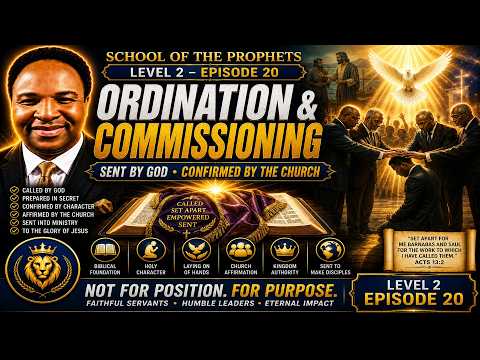
A calling is not the same as a commissioning.
Many are called.
Few are prepared.
Even fewer are sent.
Throughout Scripture, God's servants passed through seasons of preparation before public ministry.